Robotics, Serbia, Europe.
Market notes, policy signals and field reports from the robotics ecosystem forming around Belgrade and the EU.
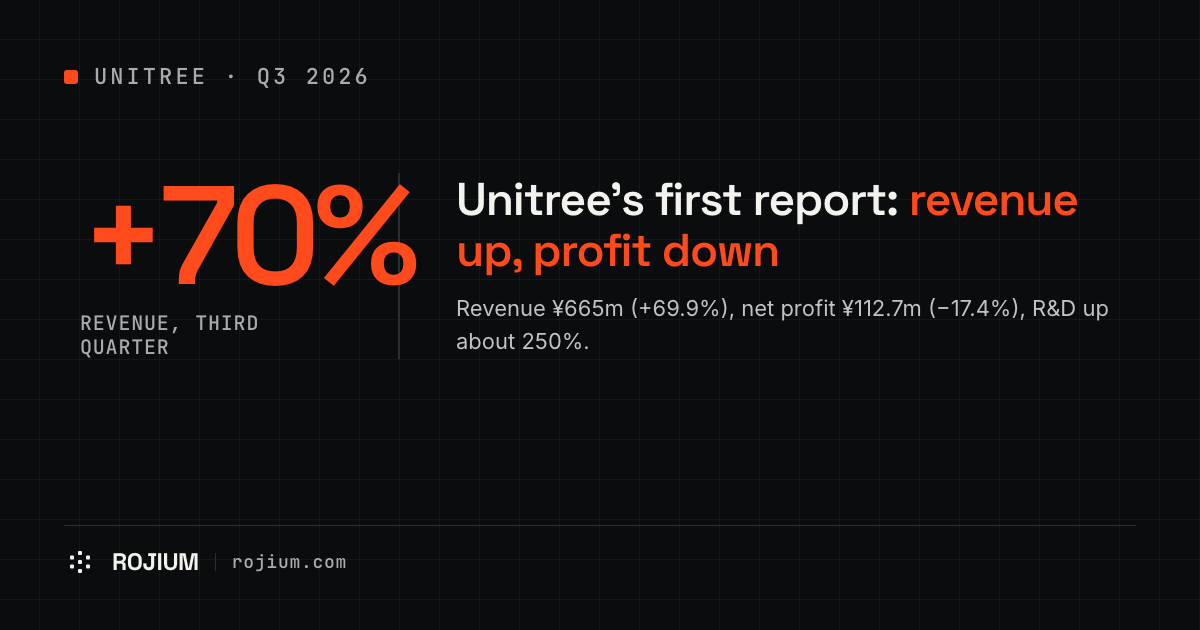
Unitree's first quarterly report since listing: what the figures tell buyers
Revenue up 70%, profit down 17%, R&D up about 250%, inventory nearly tripled — and no unit numbers. What Unitree's first report since its Shanghai listing tells a buyer in Europe.
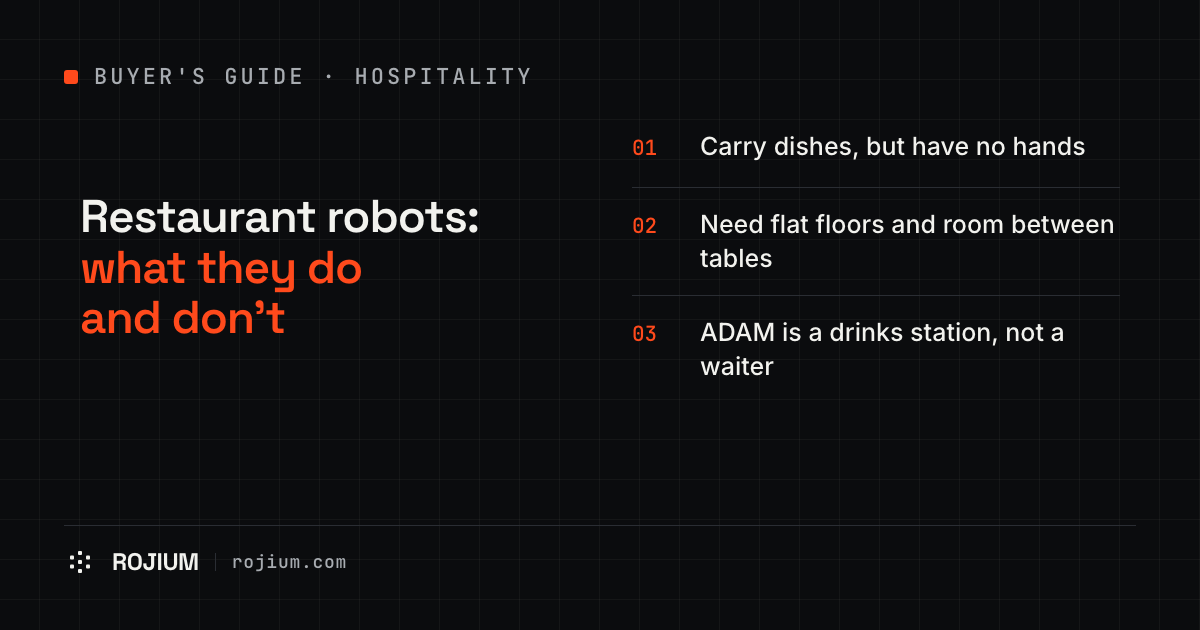
Restaurant service robots: BellaBot, DinerBot, Servi and ADAM — what they do and what they don't
Four robots sold to restaurants, hotels and cafés compared on published specs: what they carry, what they cannot do, what operators measured and what the few public prices say.
Robots instead of herbicide: FD20, LaserWeeder and ARA on Vojvodina's row crops, and what Orio's exit teaches
Three ways to weed row crops without blanket spraying, compared on maker data and a German cost study, plus what IPARD III says and what happened to Naïo's Orio.
Robot floor scrubbers for a shopping centre: Neo 2, T7AMR, Scrubber 50, KIRA B 50 and what the monthly bill covers
Four autonomous scrubber-dryers for malls, airports and hospitals compared on published specs, and what goes into the monthly bill when no maker publishes a price.
Mowing slopes with no one on them: remote-controlled mowers compared
Six radio-controlled slope mowers side by side: stated slope and what it hides, weight and transport, what the law requires when the link drops, and what such a machine costs and saves.
A robot dog without a standard: which rules apply to walking machines in 2026
ISO 10218:2025 covers industrial robots, while the standard for legged and self-balancing machines, ISO 25785-1, is still a committee draft. What buyers can require meanwhile.
Robot dogs for plant inspection: Spot, ANYmal D, X30 and B2 compared
Four quadrupeds sold for industrial inspection, side by side: what each does on a round, where it is documented at work, its limits, and what ownership costs beyond the robot.
Serbia had robotics before Šabac: what Lola and Pupin built, and what is left
Lola's industrial robots welded car doors in Kragujevac; the Mihajlo Pupin Institute gave robotics the zero-moment point and early powered exoskeletons. What the record shows, which claims it does not support, and what it suggests for Šabac.
Motek 2026 in review: a smaller show, and what robot buyers can take from it
The 43rd Motek closed on 8 October with 152 exhibitors and 6,385 trade visitors, far fewer than in 2024, while VISION next door set a record. What was on the stands, where humanoids appeared, and what it means for buyers.
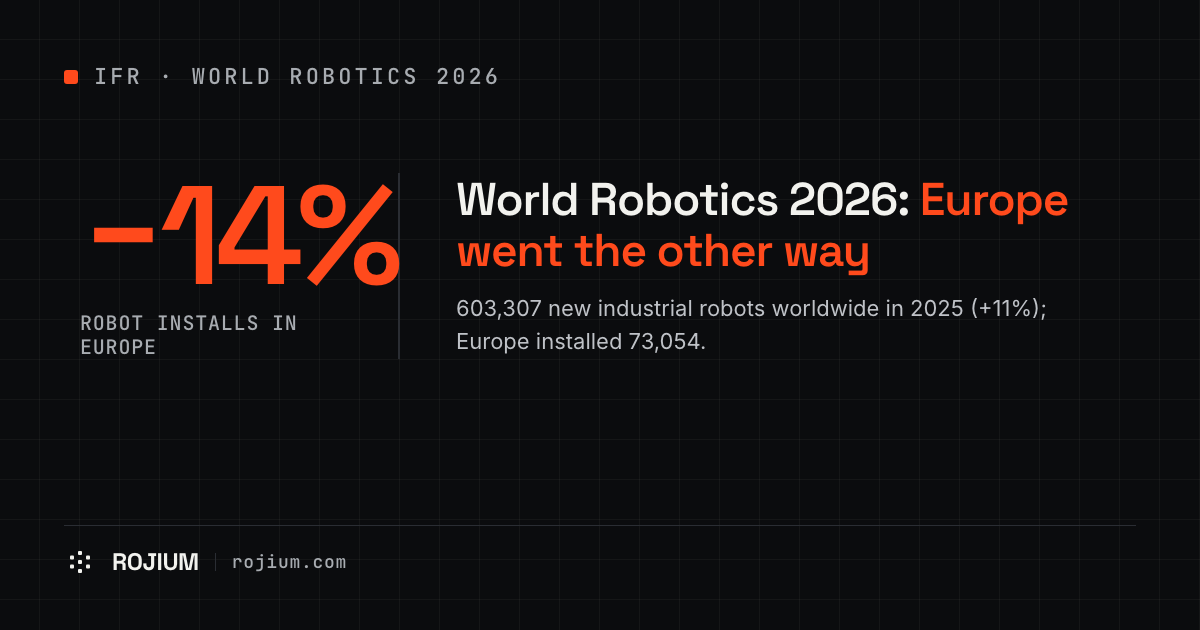
World Robotics 2026: what the IFR's numbers say about Europe
The IFR counted 603,307 new industrial robots worldwide in 2025. Europe installed 14% fewer, Asia took 76%, and humanoids are still a pilot-scale market. What the data does and doesn't say about Serbia.

Europe builds its own humanoids: who, for whom and with whose money
NEURA, Humanoid, Hexagon, Wandercraft and others build humanoids in Europe, usually around an industrial customer that is also a parts supplier and an investor. Who is who, and which numbers are still plans.
Who is Minth: the company behind Serbia's robot line, in one profile
AGIBOT designs the robots, but Minth owns the site, employs the people and receives the subsidies. What the company is, what it has already built in Serbia, and what is still a presentation.
Boston Dynamics' weapons ban covers ICE too - the platform behind Serbia's armed robot dogs has no published policy
On 9 September Boston Dynamics confirmed to Boston.com that its weapons ban covers every customer, ICE included. Four days later Serbia put armed robot dogs on a live-fire range - built by a manufacturer nobody has named, under a policy nobody has published.

Boston Dynamics isn't rushing to IPO - what that says about real humanoid timelines
A Hyundai executive told Reuters a 2027 listing for Boston Dynamics "won't be easy" - Atlas isn't deployed at scale, the company is still unprofitable. Unitree and AGIBOT reached public markets within a year of trying. What the gap says about real deployment timelines.
Serbia opens a drone assembly plant, 19 days after the Šabac robots
On 17 September Vučić opened a plant to assemble Israeli-designed combat drones. Like Šabac, it starts with assembly and promises local production later — with far fewer numbers disclosed.
Different flag, same robot? A buyer’s checklist for robots sold under a local brand
A French robot maker warns that Chinese suppliers could reach Europe under local brands — and calls it too early to say they will. Six questions that separate a European robot from a European label.
Unitree's stock cools after the IPO rally: what it means for buyers
Unitree's stock hit a fresh post-IPO low on 16 September, then rebounded more than 6% the next day. None of that changes what a European buyer is actually choosing between — Unitree's price list or AGIBOT's.
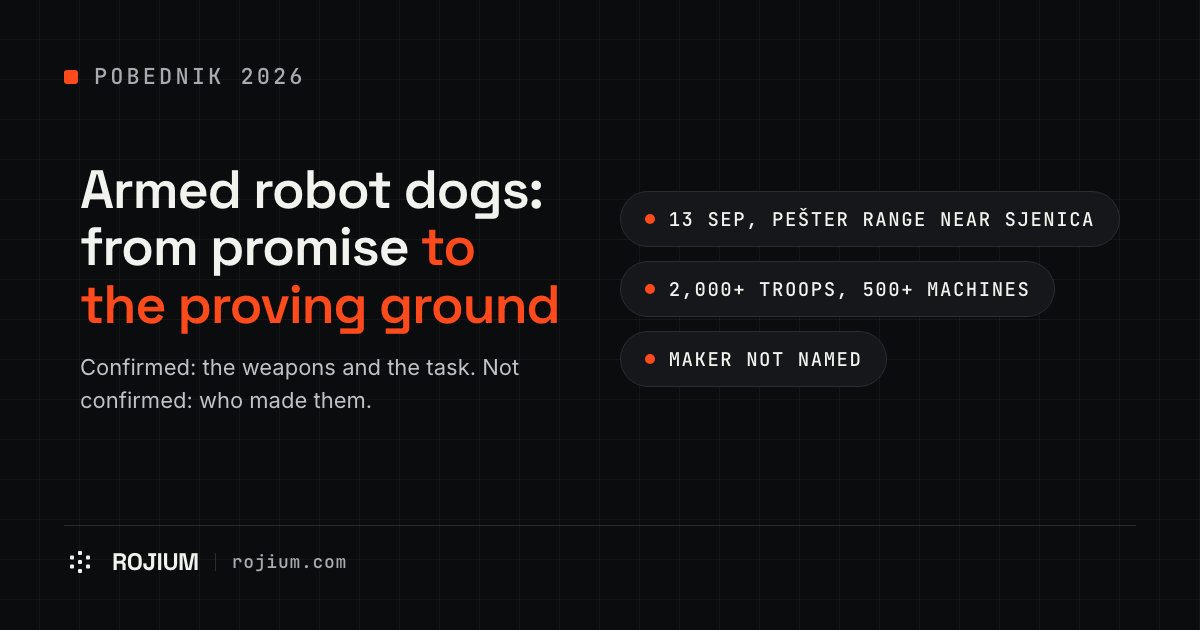
Armed robot dogs: from a promise to the proving ground in two weeks
On 13 September Serbia showed armed robot dogs in public for the first time, fulfilling a promise made two weeks earlier. Confirmed: the weapons and the task. Not confirmed: who made them.
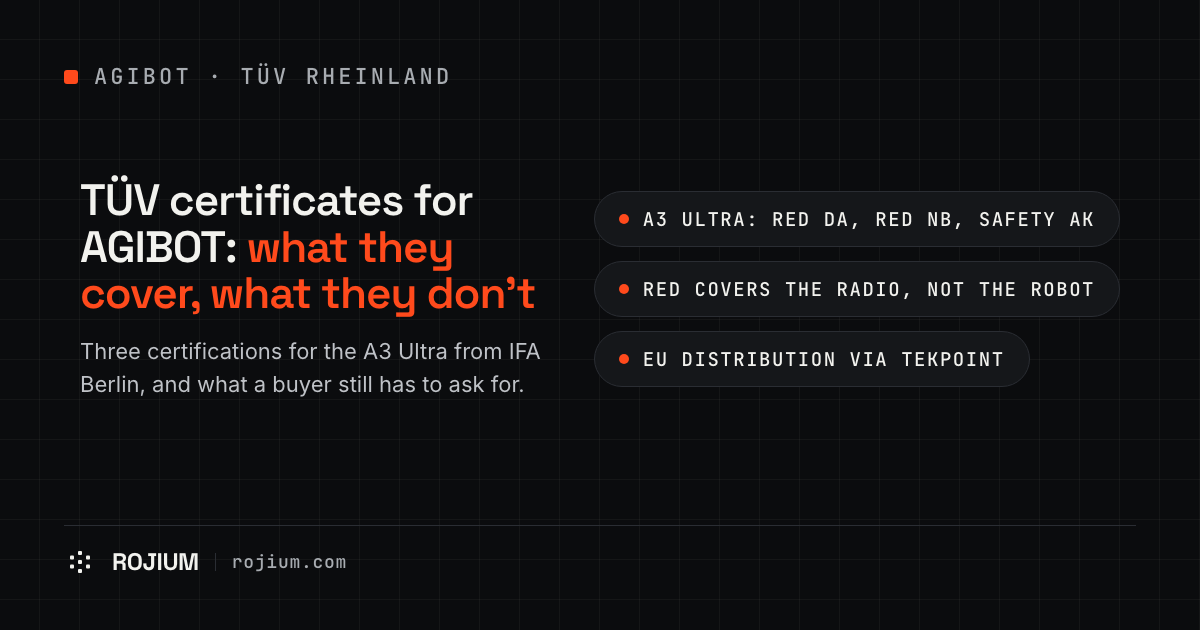
AGIBOT's TÜV Rheinland certificates: what they cover, what they don't
AGIBOT left IFA Berlin with TÜV Rheinland certification for the A3 Ultra and a European distribution deal with Tekpoint. Here's what RED DA, RED NB and Safety AK actually test — and what a Serbian buyer still needs to ask for.
Serbian-made or Chinese-made: the rules-of-origin question for Šabac's robots
A MERICS analyst says Serbia's trade status could let Chinese-designed robots skirt future EU tariffs. What decides whether a Šabac-built robot counts as Serbian — and what the state pays per job to keep it that way.
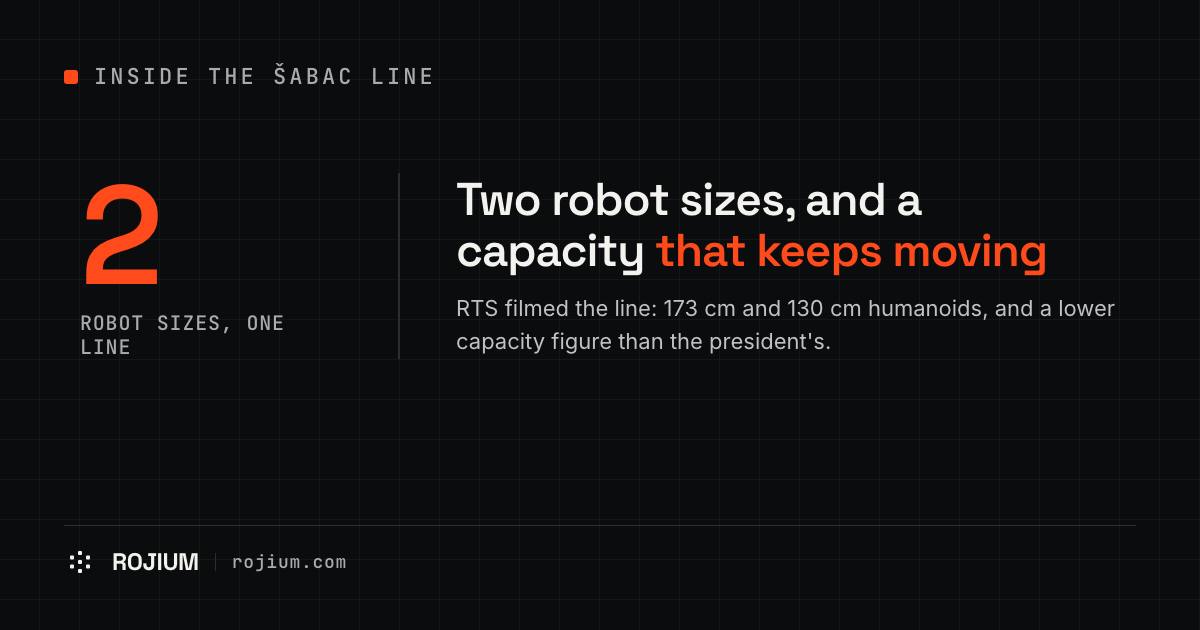
Inside the Šabac line: two robot sizes, and a capacity number that keeps moving
RTS filmed the Šabac line on 3 September: two robot sizes, a month of operator training in China, and a capacity figure that doesn't match the president's own number from a week earlier.
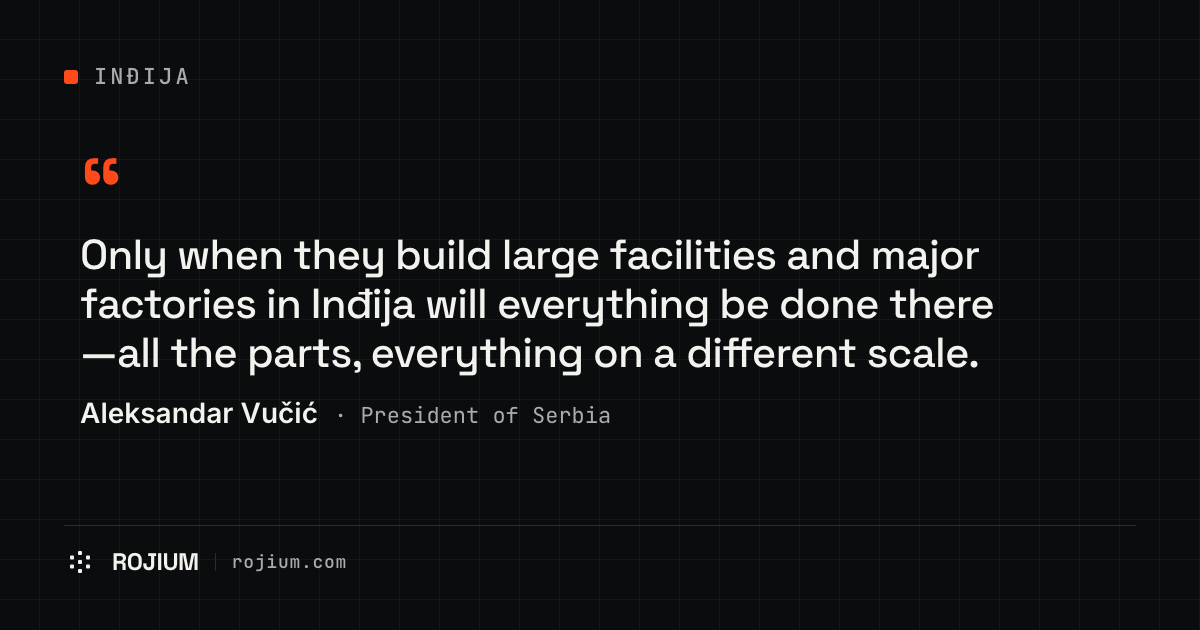
Around the Šabac plant: a park and a battery plant in Inđija, robot training in Kragujevac
Within two days of the Šabac opening, Serbia's robot project gained a €200m park and a €100.5m battery plant in Inđija and a robot-training centre in Kragujevac. So far only assembly is running.
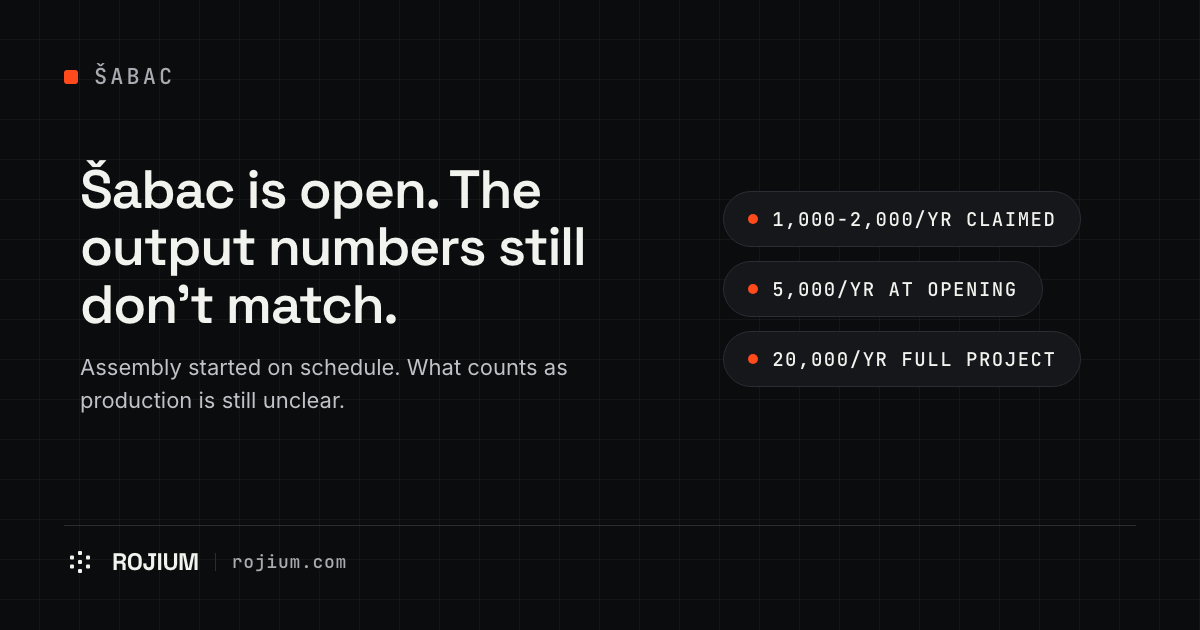
The Šabac robot plant opens: assembly has started, the numbers still don't match
On 29 August Minth opened its humanoid-robot plant in Šabac with President Vučić. The end-of-August date held; what “production” means at this stage has not been specified.
Unitree lists in Shanghai: what $900 million means for robot prices
Unitree raised about ¥6.1 billion in Shanghai and closed its first trading day 460% up. What the money is for, what has happened to its prices, and why AGIBOT matters for buyers in Europe.
AGIBOT named as the company behind the Šabac robot factory
Serbia's trade minister said on 12 August that AGIBOT will open the Šabac humanoid-robot factory with Minth at the end of August. Behind the 'world leader' label are first-half figures that also count wheeled robots.
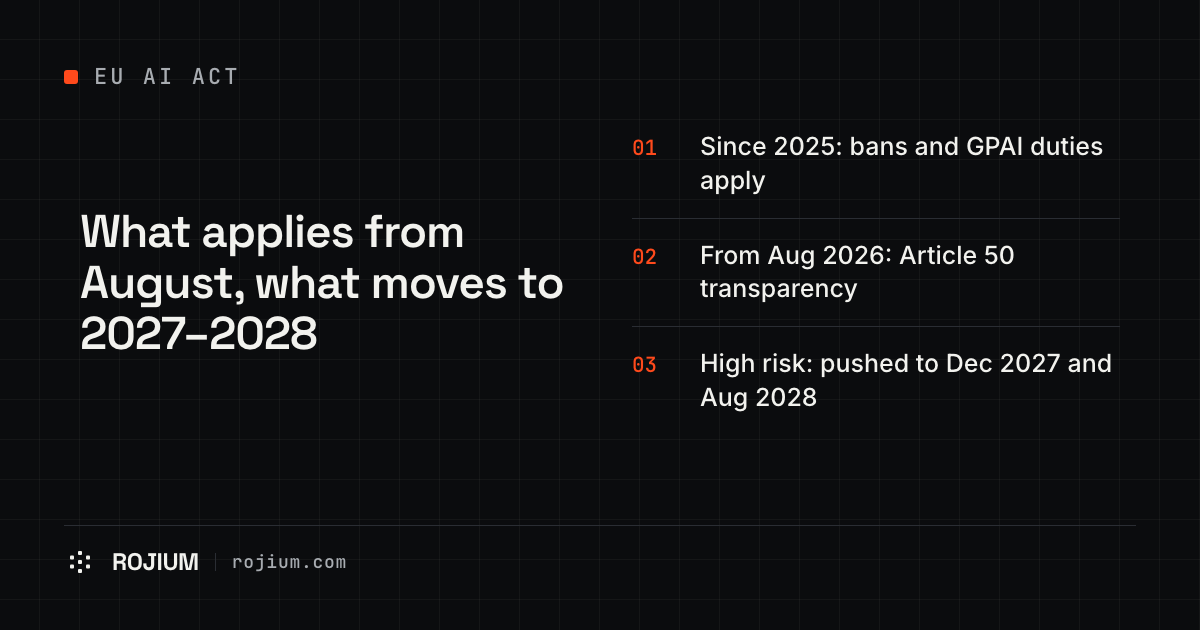
EU AI Act: what applies from 2 August and what moved to 2027–2028
The AI Act's general application date arrived on 2 August 2026, but days earlier the Digital Omnibus pushed the high-risk rules to December 2027 and August 2028 — and sent AI in machinery, robots included, down a separate route.
The US shuts the door on new foreign robots: where Chinese humanoids go next
On 28 July the FCC barred new foreign-produced humanoids and robot dogs from the US market; models already authorised stay on sale. For Chinese makers, Europe moves to the front.
Reality check: what Serbian experts actually say about the robot plan
Robotics professors and economists broadly agree on two things — Serbia has real engineering talent, and a single factory does not make a robotics power. A sober read of the domestic debate.

The start date slips again: robot production now due end of August
On 13 July President Vučić moved the launch of humanoid-robot production in Šabac to the end of August, after the deal with the investor was finalised. It is the third date the project has been given.
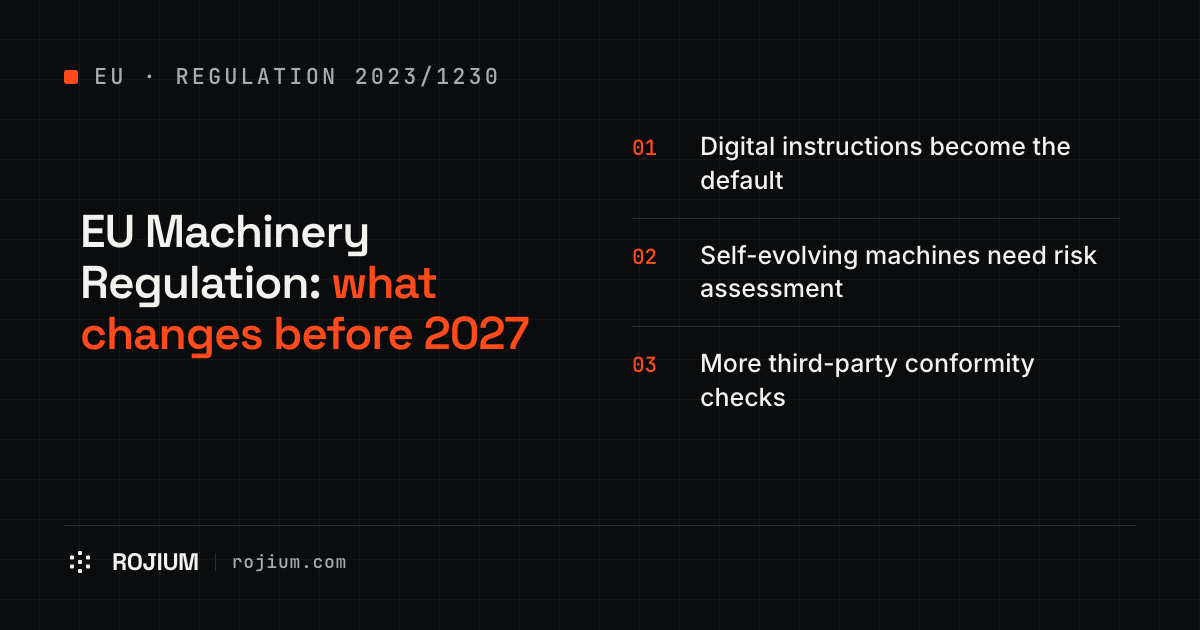
EU Machinery Regulation 2023/1230: what changes for buyers before 2027
The Machinery Directive is being replaced by Regulation 2023/1230 from January 2027. Here's what actually changes for anyone buying autonomous or semi-autonomous machines in the EU.
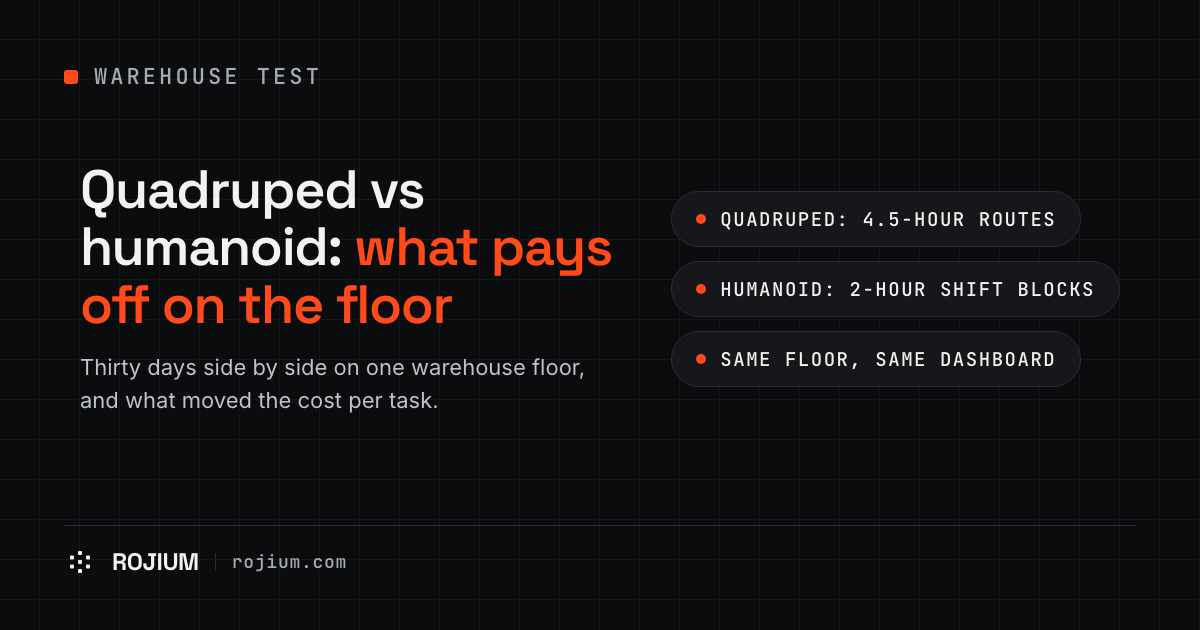
Quadruped vs humanoid: which robot actually pays off on a warehouse floor
We ran a quadruped inspection unit and a humanoid picking unit side by side for 30 days on the same warehouse floor. Here's what actually moved the cost-per-task number.

Belgrade emerges as the EU's nearshore robotics assembly hub
Three final-assembly lines opened around Belgrade in the last two quarters. Why manufacturers are picking Serbia over Central Europe for EU-bound robotics production.
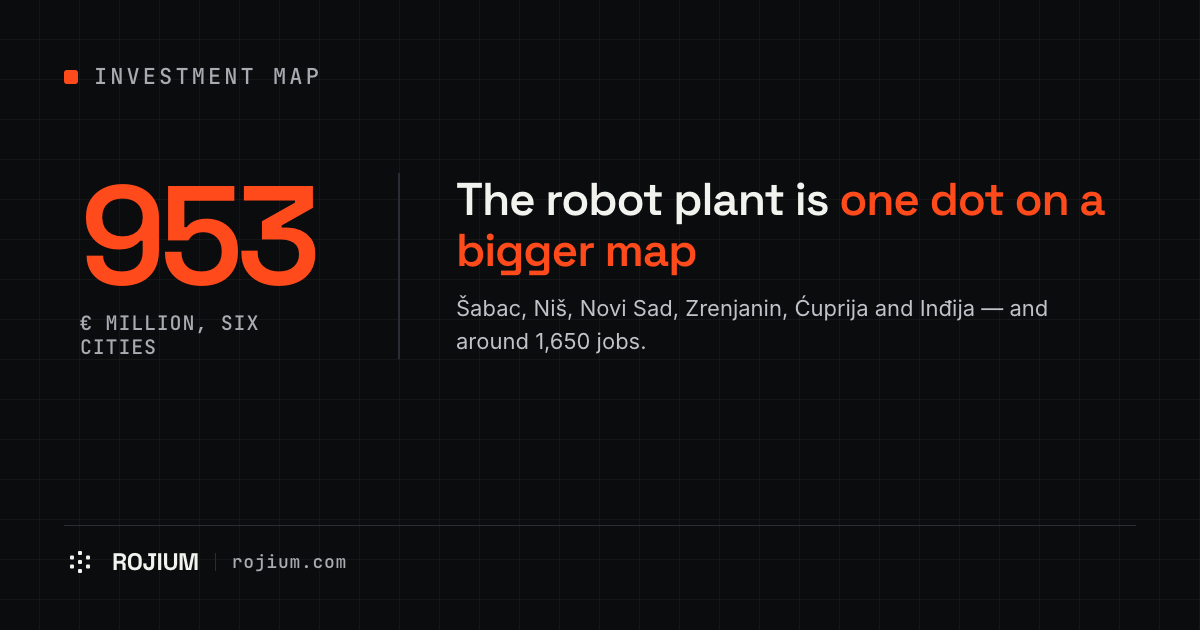
Where the €953 million lands: the map beyond Šabac
The robot factory is one dot on a bigger map. The €953 million of Chinese commitments from Vučić's state visit spreads across six Serbian cities and several industries — here's the geography.
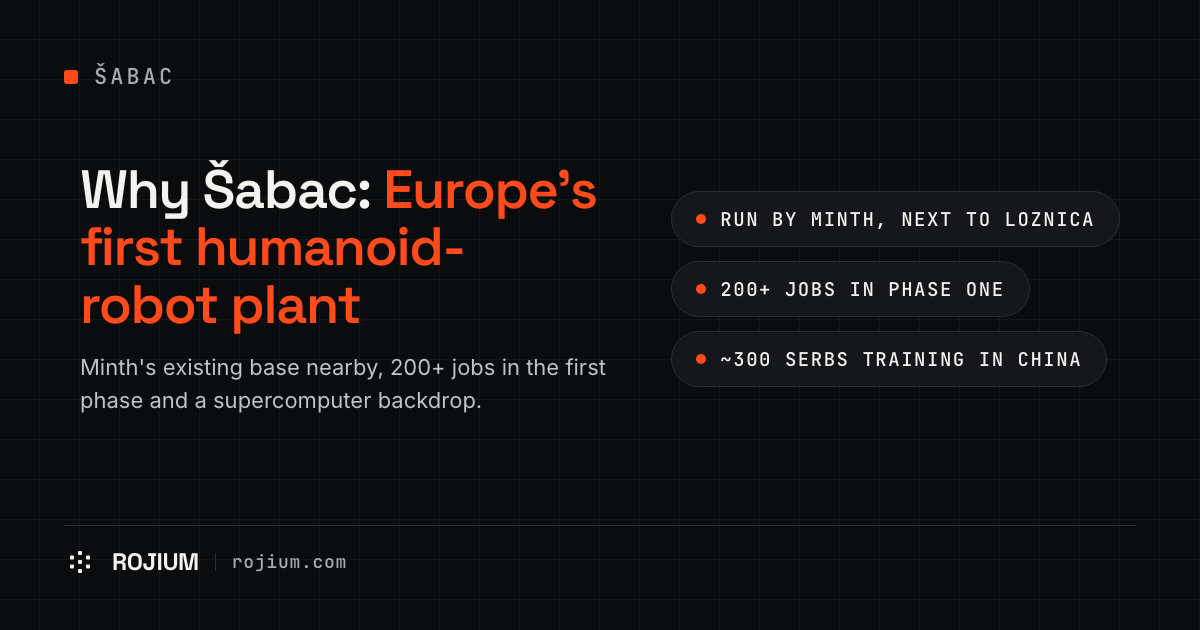
Why Šabac? The town chosen for Europe's first humanoid-robot plant
By early June the location was named: Šabac, alongside Minth's existing Loznica operations. E-government chief Mihailo Jovanović laid out jobs, investment and a digital-infrastructure backdrop of supercomputers.
1,000 to 2,000 a year: the economics Mali is selling
Finance Minister Siniša Mali put an output range and a use-case list on Serbia's robot plan — coffee-making, hotel reception, defence — and leaned hard on the 24/7 argument. Here's what holds up.
Two months to robots: the July 15 timeline
From Beijing, Vučić put a date on it — humanoid-robot assembly to begin in Serbia by 15 July 2026, with 500 workers training in China and a starring role planned at Expo 2027.
Beyond the robots: Serbia's industrial-policy framing
Deputy PM Adrijana Mesarović cast the China trip as more than a robot photo-op — new development centres, industrial zones and a bid to sit 'among the most technologically advanced in Europe'.
Inside Mint Future Factory: the visit that set the template
Robots dancing the Moravac, a flying-taxi prototype and a cocktail-mixing arm — Vučić's tour of Minth's innovation centre in China was equal parts showcase and blueprint for what Serbia says it wants to copy.
The 13 documents behind Serbia's robot ambitions
Before any factory, there was paperwork. In Beijing on 25 May 2026, Serbia and China signed thirteen documents — including a memorandum on artificial-intelligence cooperation — that frame the whole robotics push.
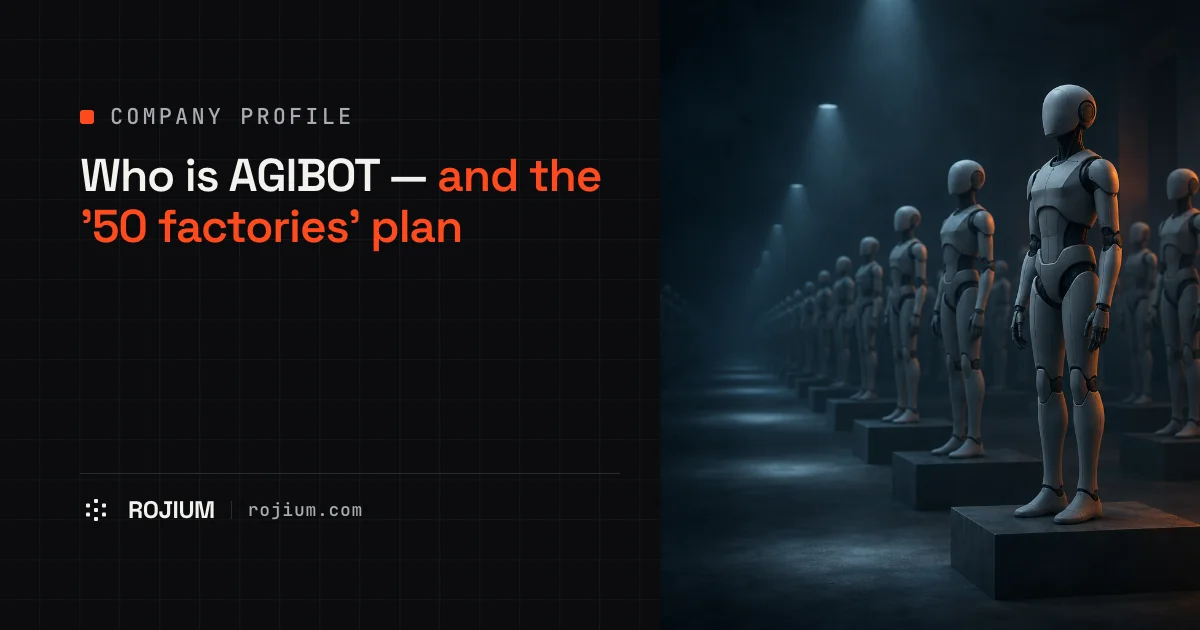
Who is AGIBOT — and how Serbia fits its '50 factories' plan
The Chinese partner is not a bit player: AGIBOT ranked first in the world for humanoid shipments in 2025. Understanding the company clarifies both the promise and the scale of Serbia's ambition.
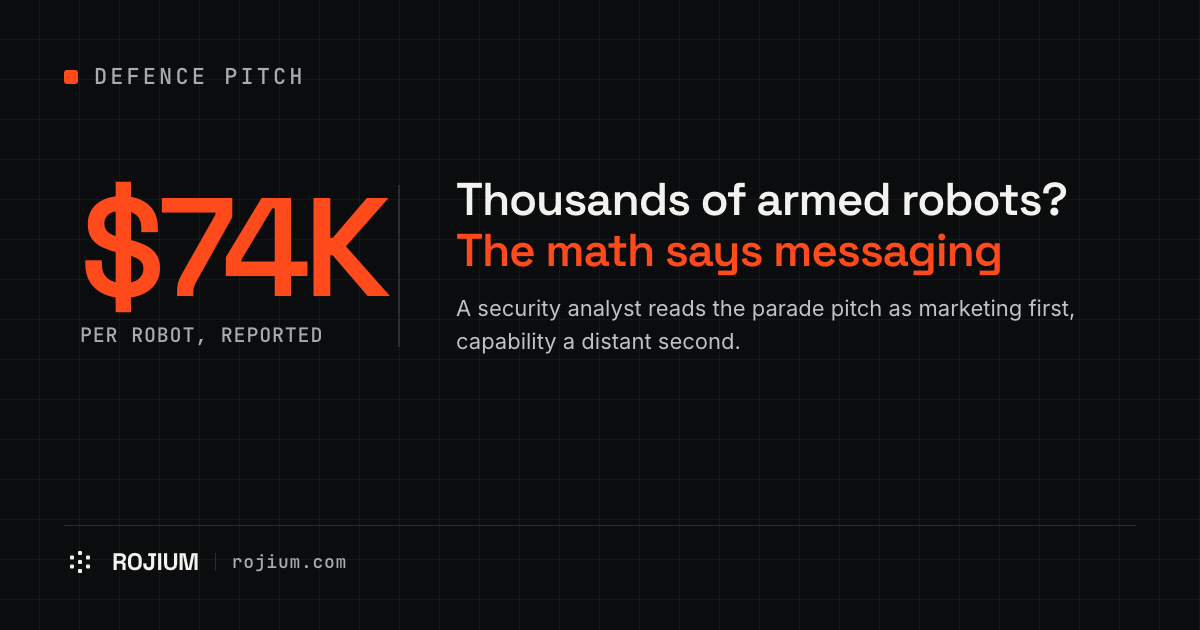
Robots on parade: the military side of Serbia's robot pitch
Vučić has floated thousands of armed humanoid robots at the next military parade and possible purchases from China. Security analysts read it as messaging first, capability a distant second.
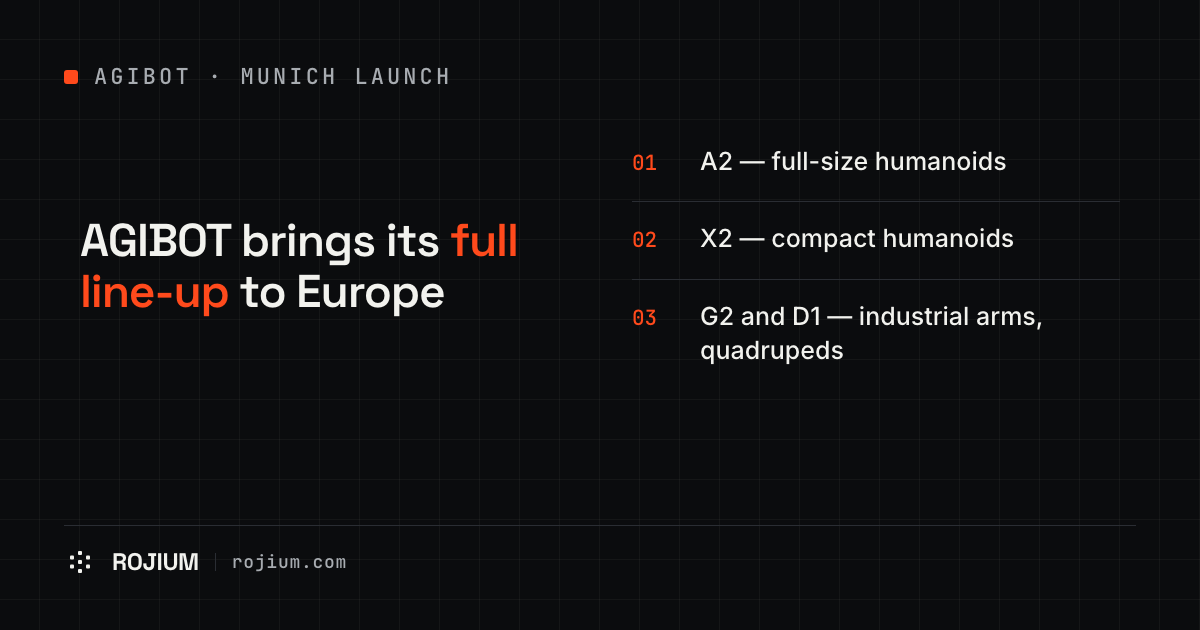
Meet AGIBOT: the robot maker behind Serbia's factory plan
Weeks after the Serbian announcement, AGIBOT rolled out its full humanoid and quadruped line-up in Munich with Minth as its European sales partner — a look at the hardware that could end up assembled in Šabac.
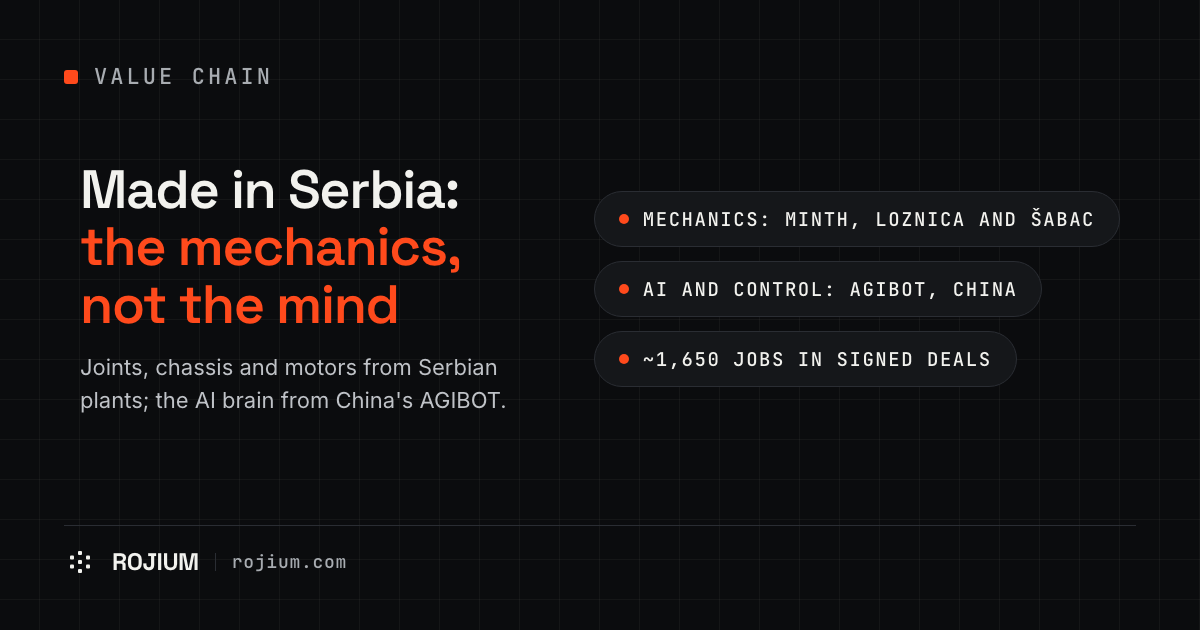
What's actually made in Serbia: the mechanics, not the mind
The plan splits cleanly: joints, chassis, motors and housings from Serbian plants; the AI 'brain' from China's AGIBOT. That division decides how much value actually stays in Serbia.
Vučić floats Serbia as Europe's first humanoid-robot producer
An early-February announcement put a number on the ambition: a roughly €100 million project with Chinese partners that would, on paper, make Serbia the first country in Europe to build humanoid robots.
Operator account
Need a robotics fleet for a real site?
Send the use case. Rojium will map hardware, service, financing and EU logistics into one formation.