Unitree's first quarterly report since listing: what the figures tell buyers
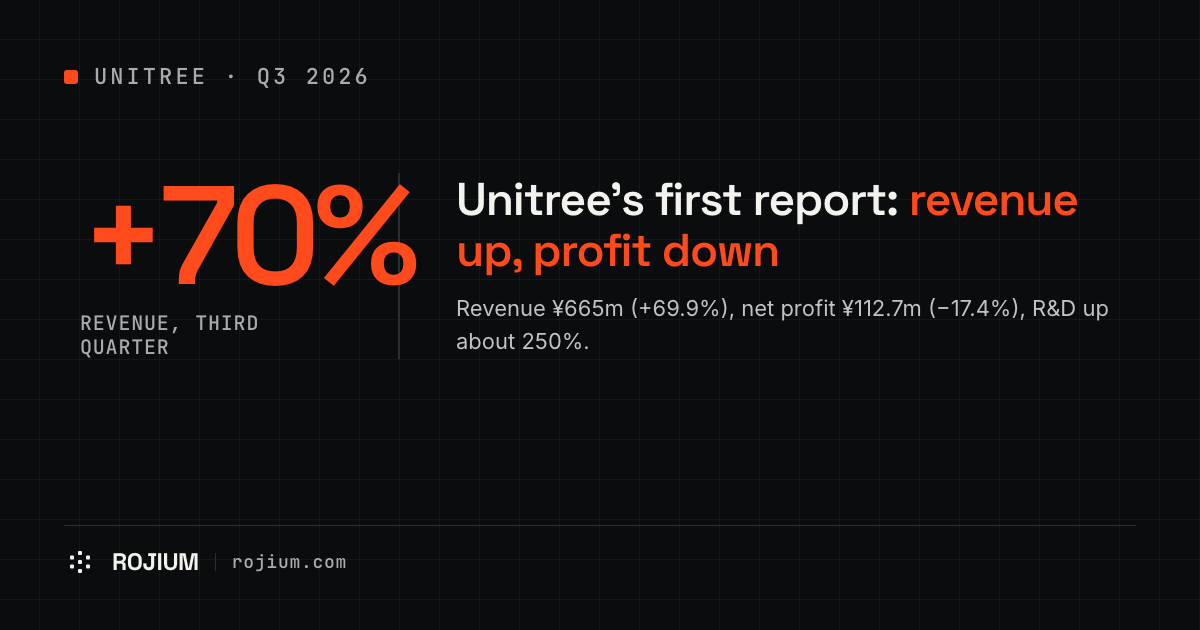
On the evening of 28 October Unitree Robotics published its first quarterly report since listing on Shanghai's STAR Market on 19 August. Third-quarter revenue rose 69.9% year on year to 665 million yuan (about $100 million), while net profit attributable to shareholders fell 17.4% to 112.7 million yuan as research spending grew by about 250%. In September Rojium looked at the share price; this time there are figures on the business itself — margin, costs and stock on hand — and they matter more to a buyer than the ticker.
The quarter in figures
| Indicator | Value | Compared with |
|---|---|---|
| Revenue, Q3 | ¥665m | +69.9% year on year |
| Net profit attributable to shareholders, Q3 | ¥112.7m | −17.4% year on year |
| Gross margin, Q3 | 50.6% | −8.4 points year on year |
| R&D spending, Q3 | ¥127m, 19.1% of revenue | +249.6% year on year |
| Selling expenses, January–September | ¥230m | ¥76m a year earlier |
| Inventory, 30 September | ¥1.02bn | ¥368m at the end of 2025 |
| Operating cash flow, January–September | ¥194m | −54.7% year on year |
Over nine months revenue rose 55.7% to 1.82 billion yuan and net profit by 270.5% to 386.7 million yuan. That jump comes from a low base: a year earlier Unitree booked a large one-off share-based payment expense. Excluding non-recurring items, nine-month profit fell 18.8% to 349 million yuan.
Where the money goes
Unitree says the R&D increase comes mainly from work on AI models for robots and computing power, along with a larger research team and new products. For January–September, selling expenses rose from 6.5% to 12.7% of revenue. The gross margin is still above 50%, but it is lower than a year earlier, and the report does not explain why. The prospectus showed the margin rising towards 60% while the average price of a humanoid fell by more than 70% (Rojium wrote about it in August); this quarter the margin moved the other way.
Inventory and cash
Inventory nearly tripled in nine months, and receivables rose from 59 million to 143 million yuan — both far faster than revenue. The report does not say what the stock consists of; STAR Market Daily reads it as stocking up ahead of demand. Operating cash flow fell by more than half, which Unitree attributes to higher payments for purchases, wages, sales and research. At the same time the company holds 7.35 billion yuan in cash after the listing.
What it means for a buyer in Europe
The report gives no unit numbers, so revenue cannot be turned into robots shipped or an average price per robot. In its exchange announcements the company itself describes the humanoid industry as still at an early stage of commercialisation. What the figures do show is a profitable supplier with a large cash buffer that is spending more on models and on selling, while earning a lower margin on what it sells.
A quarterly report is not a price list. It says nothing about prices, delivery times or service in Europe — those still have to come from the distributor, in writing, with the model and configuration named.
What we'll watch
Whether the annual report breaks revenue down by product and gives unit numbers, whether the margin keeps falling, and whether the inventory turns into deliveries.
Sources
- Reuters (via WHTC) — Unitree's quarterly revenue surges 70% in test for China's robotics sector
- Caixin Global — Unitree's robot boom comes with rising costs, inventory
- Global Times — Unitree's post-IPO results show strong revenue growth
- STAR Market Daily — Unitree's first quarterly report since listing (in Chinese)
- Phoenix Finance — Unitree's 2026 third-quarter report (in Chinese)
- CITIC Securities via Tencent News — Unitree Q3 2026 data summary (in Chinese)
Turn the use case into a machine list.
Describe the site, payload and timeline. Rojium will map suitable hardware and service options.
Robot showcase
Compare the first catalogue machines.
Open the robot showcase to review pilots by vertical, use case and request-only commercial terms.
Related articles
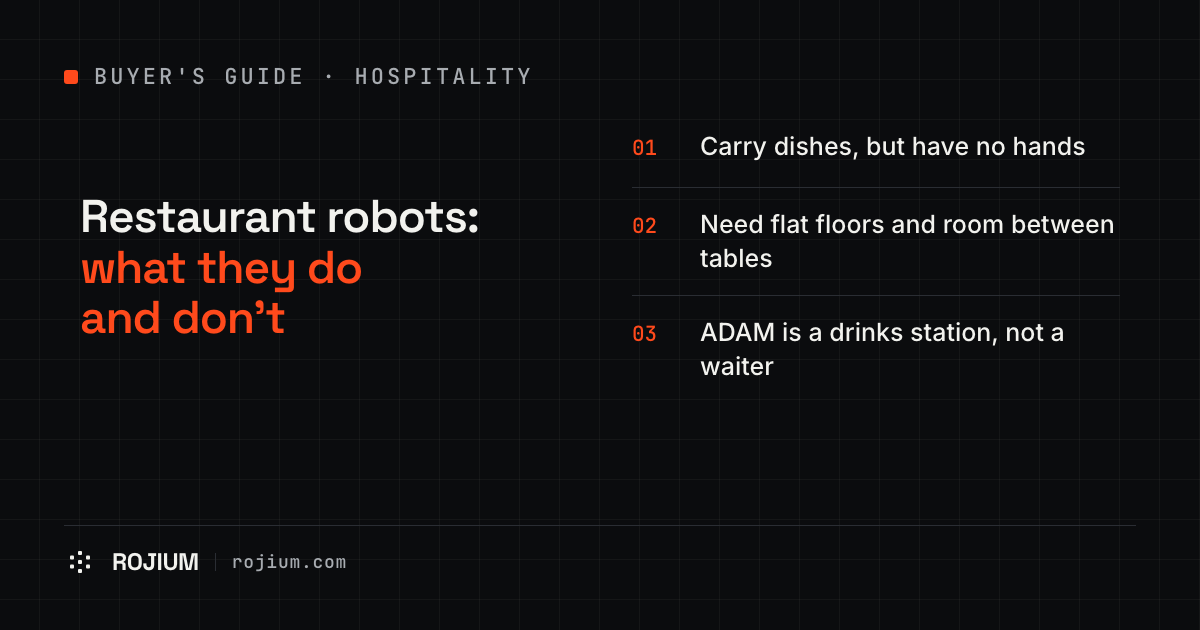
Restaurant service robots: BellaBot, DinerBot, Servi and ADAM — what they do and what they don't
Four robots sold to restaurants, hotels and cafés compared on published specs: what they carry, what they cannot do, what operators measured and what the few public prices say.
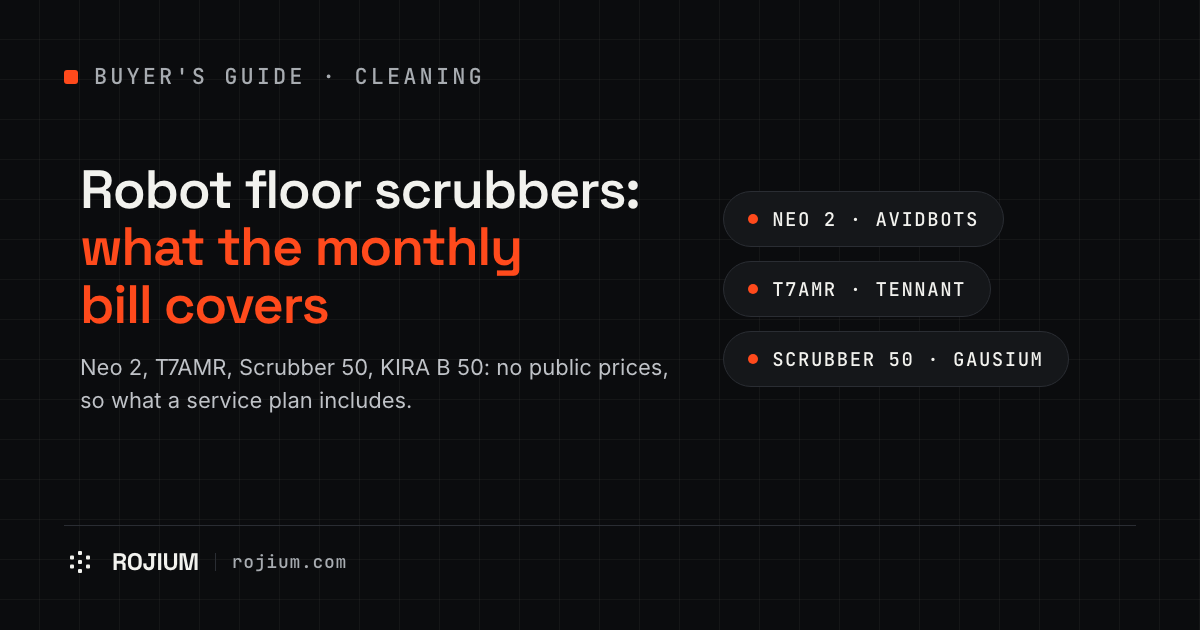
Robot floor scrubbers for a shopping centre: Neo 2, T7AMR, Scrubber 50, KIRA B 50 and what the monthly bill covers
Four autonomous scrubber-dryers for malls, airports and hospitals compared on published specs, and what goes into the monthly bill when no maker publishes a price.
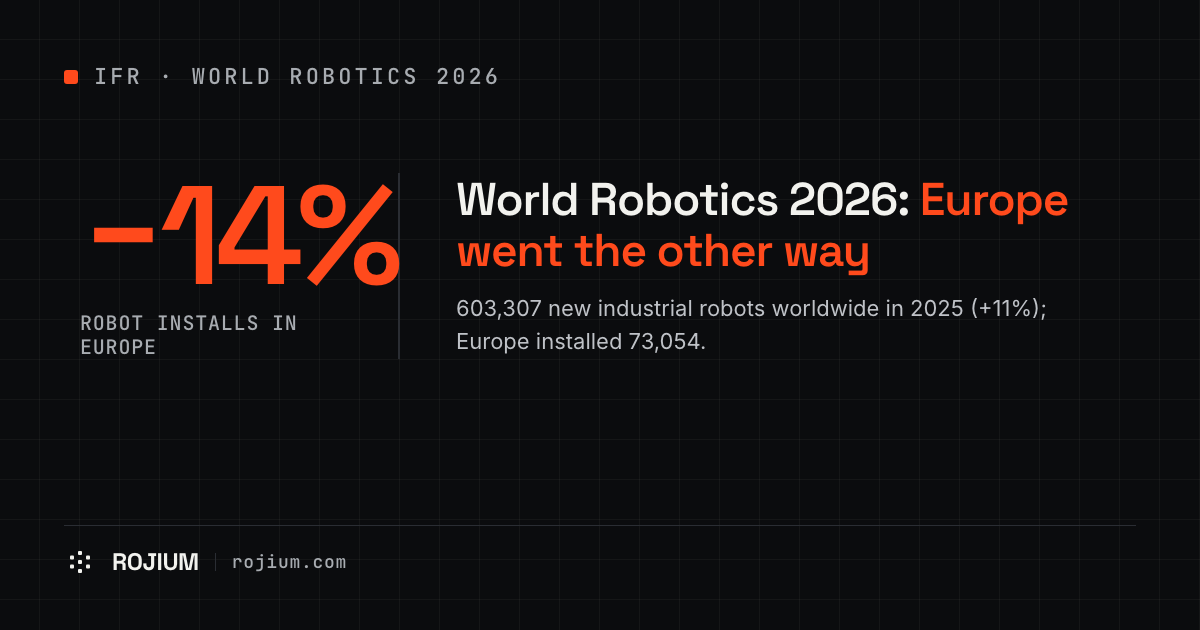
World Robotics 2026: what the IFR's numbers say about Europe
The IFR counted 603,307 new industrial robots worldwide in 2025. Europe installed 14% fewer, Asia took 76%, and humanoids are still a pilot-scale market. What the data does and doesn't say about Serbia.